
Panchakarma is one of the most recognised therapies in Ayurveda, and Kerala has become one of the most sought-after destinations for experiencing it in a traditional setting. But authentic Panchakarma is very different from the short “detox” programmes often promoted by wellness centres. It is not simply a collection of oil massages, herbal treatments or a few days of restricted food.
Panchakarma is a structured Ayurvedic therapeutic programme that begins with preparation, moves into prescribed procedures and ends with a period of careful recovery. Kerala’s long-standing Ayurvedic tradition, experienced physicians and established treatment practices have made the state particularly associated with Panchakarma. Kerala Tourism describes Panchakarma as a three-stage process involving Purvakarma, Pradhanakarma and Paschatkarma, with the treatment selected according to the individual’s requirements.
For someone looking for authentic Panchakarma treatment in Kerala, understanding what actually happens during the programme is more important than simply choosing a package labelled “Panchakarma.”
What Is Panchakarma?
The word Panchakarma comes from two Sanskrit terms: Pancha, meaning five, and Karma, meaning actions or procedures. In classical Ayurveda, Panchakarma refers to five principal therapeutic procedures used within appropriate treatment plans. These are traditionally identified as:
- Vamana – therapeutic emesis
- Virechana – therapeutic purgation
- Vasti – therapeutic administration through the rectal route
- Nasya – administration of prescribed medicines through the nasal route
- Raktamokshana – therapeutic bloodletting procedures
The important point is that not every person undergoing Panchakarma receives all five procedures. The treatment is selected according to the individual’s constitution, condition, strength and therapeutic requirements. Kerala’s Department of Indian Systems of Medicine also describes Panchakarma as a prominent Ayurvedic therapeutic tool and notes that procedures such as Abhyanga and Swedana are used as preparatory measures. That is why authentic Panchakarma should always begin with an Ayurvedic physician’s assessment.
What Happens Before Panchakarma?
The preparation stage is called Purvakarma. This stage is not something to rush through. It prepares the body for the main therapeutic procedures and is an important part of the traditional Panchakarma process. Depending on the individual’s programme, Purvakarma may include Snehana, the use of medicated oils or ghee according to prescription, and Swedana, therapeutic sweating or fomentation. Pachana and other preparatory measures may also be used.
Kerala Tourism describes Purvakarma as the first stage of Panchakarma and identifies Snehana and Swedana among the procedures used to prepare the body for the main treatment. The duration and exact preparation are not identical for everyone. This is one of the first signs of a properly personalised Panchakarma programme.
What Happens During Panchakarma?
The main treatment stage is known as Pradhanakarma. This is when the physician-prescribed Panchakarma procedures are carried out. The specific procedure depends on the individual’s Ayurvedic assessment.
Vamana, Virechana, Vasti, Nasya and, in selected circumstances, Raktamokshana belong to the traditional fivefold framework. The procedures are therapeutic interventions and should not be treated like spa services. This is also why the experience and training of the Ayurvedic physician and therapists matter.
Panchakarma requires appropriate preparation, correct procedure, and careful observation. Kerala’s Department of Indian Systems of Medicine specifically notes that Panchakarma procedures require experience and skill and are carried out by trained therapists under the Ayurvedic system.
What Happens After Panchakarma?
The treatment does not simply end when the main procedures are completed. The final stage is Paschatkarma, the period of post-treatment care and gradual return to normal routine.
Food, rest and lifestyle are particularly important during this stage. Kerala Tourism identifies diet, rest and lifestyle modification as important elements of Paschatkarma. This is one of the aspects that makes Panchakarma fundamentally different from the modern idea of a quick detox.
Why Is Kerala Considered a Leading Destination for Panchakarma?
Kerala’s connection with Ayurveda is not a recent wellness trend. Ayurveda has been practised across the state for generations, and Kerala developed its own strong traditions of therapeutic practice, oil treatments, herbal preparations and residential care. The state has also built a substantial Ayurveda tourism ecosystem around this heritage. Kerala Tourism identifies Ayurveda and Panchakarma among the experiences that have helped give Kerala a global reputation as an Ayurveda destination.
There is another practical advantage to choosing a residential Panchakarma programme in Kerala. The treatment is not separated from everyday life. Accommodation, food, therapies, yoga, meditation and rest can be brought into one structured routine. That makes Kerala particularly suited to people who want to experience Panchakarma as a complete Ayurvedic programme rather than as an isolated treatment.
Panchakarma at Aanandakosha Ayurveda Retreat
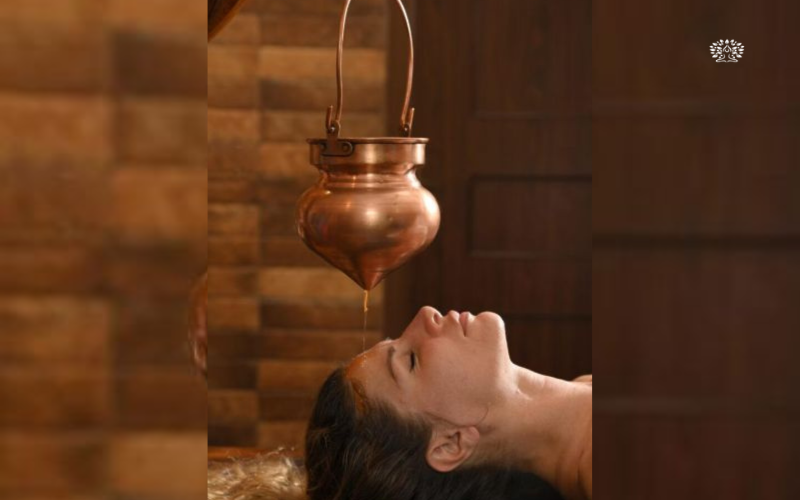
At Aanandakosha Ayurveda Retreat near Kovalam, Panchakarma is part of a broader personalised Ayurvedic experience. It is a boutique Kerala Ayurveda retreat with personalised treatments guided by experienced doctors. Its package includes Panchakarma alongside traditional therapies such as Vamanam, Virechanam, Nasyam, Vasthi and Raktamoksha, as well as supporting treatments including Pizhichil, Njavarakizhi, Shirodhara, Udwarthanam, Abhyangam, Elakizhi and Snehapanam.
The significance is not the length of the treatment menu. It is the way the treatments are brought together.
At Aanandakosha, the Ayurvedic physician assesses the guest and develops a programme around the individual’s needs. Daily consultations, personalised therapies, Ayurvedic vegetarian meals, yoga and meditation form part of the retreat experience. The retreat is located near Kovalam and around 15 minutes from Thiruvananthapuram International Airport.
Panchakarma Is Supported by More Than Panchakarma
At Aanandakosha, traditional supporting therapies can be incorporated according to the treatment plan. Abhyangam can form part of preparatory or therapeutic care. Pizhichil, Njavarakizhi, Elakizhi, Shirodhara, Udwarthanam and Swedana-based treatments may be used where appropriate. Yoga and meditation provide another part of the daily routine, while Ayurvedic cuisine gives nutrition a defined place within the programme.
The retreat also offers programmes beyond Panchakarma, including healthy joint care, Rasayana rejuvenation, weight management, stress management and sleep-focused wellness programmes.
Why Choose Aanandakosha Ayurveda Retreat?
Panchakarma is most effective when it is practised with the right diagnosis, the right sequence of therapies and the right environment for recovery. That is the philosophy followed at Aanandakosha Ayurveda Retreat. Every Panchakarma programme begins with a detailed consultation with an Ayurvedic physician. Based on your body constitution, health concerns and wellness goals, a treatment plan is created specifically for you. Throughout your stay, therapies are combined with Ayurvedic meals, yoga, meditation and daily guidance, allowing your body the time and space it needs to recover.
Located near Kovalam in Kerala, Aanandakosha offers a peaceful residential retreat where healing becomes part of your everyday routine, not just a treatment scheduled for an hour.
Experience Panchakarma in Kerala
Choosing Panchakarma is choosing a complete Ayurvedic journey. From the initial consultation and preparatory therapies to the main Panchakarma procedures and post-treatment care, every stage plays an important role in the experience.
At Aanandakosha Ayurveda Retreat, Panchakarma is delivered through a personalised, doctor-led approach in the heart of Kerala, supported by traditional therapies, nourishing Ayurvedic cuisine and a calm retreat setting designed for rest and renewal.