
Knee pain is easy to ignore when it comes and goes. A little stiffness in the morning, discomfort after walking, pain while climbing stairs or a knee that starts aching after sitting for too long. Many people simply take a painkiller and carry on with the day. For a few hours, the pain may settle. But when it returns again and again, taking another tablet gives only symptomatic relief.
This is where the traditional approach of Kerala Ayurveda offers a different perspective. Instead of looking at knee pain as an isolated symptom, Ayurveda considers the individual, daily habits, nourishment, movement and the condition of the body before deciding on a course of treatment.
At Anandakosha Ayurveda Retreat in Kerala, this forms the basis of a personalised approach to knee and joint care.
Knee Pain Beyond Painkillers
Painkillers have an established role in modern medicine. They can be useful for managing pain and inflammation when prescribed or taken appropriately. But they are not a solution for every recurring knee problem. Certain pain medicines, particularly when used in high doses or for prolonged periods without medical supervision, can carry risks. Some can affect the stomach and kidneys, while others may have cardiovascular or liver related risks depending on the medicine and the person’s health.
That does not make painkillers inherently bad. It simply means that recurring pain should not be managed indefinitely through self medication. When the knee continues to hurt, the focus needs to move from temporary relief towards understanding the condition and caring for the joint appropriately.
Painkillers and Ayurvedic Therapy: Two Different Approaches
The difference is not about choosing one system and rejecting another. It is about understanding what each approach is intended to do.
| Pain medication | Traditional Ayurvedic therapy |
| Primarily used to reduce pain and inflammation | Selected as part of a broader therapeutic programme |
| Provides symptomatic relief | Considers the individual’s condition and constitution |
| Usually addresses the immediate complaint | May combine therapies, food, movement and daily routine |
| Does not by itself change lifestyle factors | Lifestyle and nourishment can form part of the programme |
| Prolonged use of certain medicines requires medical supervision | Ayurvedic procedures are prescribed according to individual assessment |
Why Does Knee Pain Keep Returning?
Age related changes, osteoarthritis, previous injuries, excess body weight, reduced muscle strength, repetitive physical strain and an inactive lifestyle can all influence the knees. Even everyday habits matter. Sitting for long periods, poor movement patterns, lack of physical activity and an unsuitable diet can gradually affect overall physical health.
Ayurveda looks at these factors as part of the larger picture. Traditional Ayurvedic joint care, known as Sandhi Chikitsa, considers the individual’s constitution and present condition while planning treatment. The objective is not to give every person with knee pain the same therapy.
At Anandakosha, the Ayurvedic physician assesses the guest before recommending the therapies that form their programme. That is an important part of authentic Ayurvedic care.
Janu Vasthi: A Traditional Therapy for the Knees
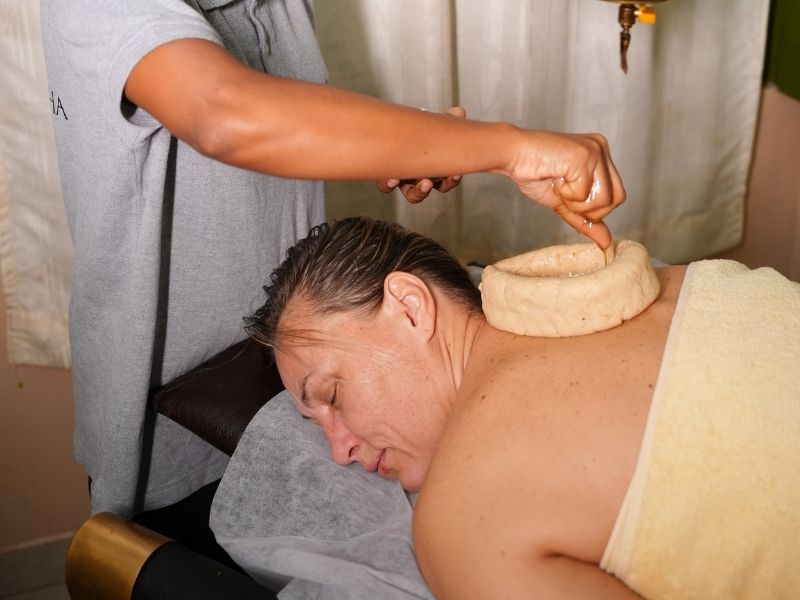
One of the most recognised Ayurvedic therapies associated with knee care is Janu Vasthi.
In this traditional procedure, warm medicated oil is retained over the knee for a prescribed period using a specially prepared herbal dough boundary. The oil used and the duration of the treatment depend on the Ayurvedic programme. Janu Vasthi is traditionally used as part of Ayurvedic care for knee and joint concerns. It is not, however, a treatment that should be considered suitable for every person with knee pain.
At Anandakosha, Janu Vasthi is prescribed after an Ayurvedic assessment and combined with other therapies depending on the individual’s requirements.
Traditional Kerala Therapies for Joint Care
Kerala has a distinctive tradition of Ayurvedic treatment, particularly its use of medicated oils, herbal preparations and therapies that have been passed down through generations.
For knee and joint care, an Ayurvedic programme may include Abhyangam, traditional oil massage, along with selected Kizhi therapies, Swedana, Pizhichil and other procedures when considered appropriate. Each therapy has a different purpose within traditional Ayurvedic practice. Some are used for nourishment and relaxation, while others form part of therapeutic programmes prescribed by the physician. The important factor is not how many treatments a guest receives. It is how appropriately those treatments are chosen and sequenced.
At Anandakosha, traditional therapies are incorporated into a structured programme rather than offered as isolated spa treatments.
Food Matters When You Are Caring for Your Knees
Food and daily habits have an important place in Ayurveda, and Kerala’s traditional cuisine provides a natural foundation for Ayurvedic nourishment. Fresh vegetables, greens, lentils, rice, spices, herbs and locally available ingredients have long been part of Kerala’s food culture. Traditional cooking methods also make food an important part of the daily rhythm.
At Anandakosha, Ayurvedic cuisine is planned as part of the retreat experience. Meals are prepared with attention to nourishment and digestion and can be adapted according to the individual’s Ayurvedic programme. There is no single food that can cure knee pain. But a balanced diet, appropriate body weight and good nutritional habits can support overall health and help create a better foundation for joint wellbeing.
Your Knees Are Connected to Your Lifestyle
Carrying excess body weight can increase the mechanical load placed on the knees. A sedentary routine can reduce strength and mobility. Poor sleep and persistent stress can affect how the body responds to discomfort and fatigue. This is why a good Ayurvedic programme does not stop with the painful joint.
At Anandakosha, guests can also explore programmes for weight management, stress management, sleep restoration, Panchakarma and Rasayana rejuvenation. The connection is simple. Better joint care can involve more than treating the joint itself. It can mean improving movement, eating more appropriately, getting adequate rest and developing a daily routine that is easier for the body to sustain.
Why Anandakosha for Knee Care?
An Ayurvedic massage centre and a residential Ayurveda retreat offer very different experiences. At Anandakosha Ayurveda Retreat, knee and joint care takes place within a complete Ayurvedic environment. Consultation, prescribed therapies, Ayurvedic food, yoga, meditation, rest and daily routine become part of the stay.. The physician can assess the individual’s response to treatment. Therapies can be adjusted when necessary. Food and daily routines can complement the treatment programme, while the peaceful setting gives the body time to rest. Located in Kerala near Kovalam, Anandakosha brings together traditional Ayurvedic therapies and a personalised residential experience for guests seeking focused wellness and therapeutic care.
Explore Anandakosha Ayurveda Retreat
Long-term joint health depends on movement, healthy weight, nourishing food, adequate rest and the right therapeutic care. Traditional Kerala Ayurveda brings these elements together through a personalised approach that works with the body . Through personalised consultation, therapies such as Janu Vasthi and Abhyangam, Ayurvedic nourishment, yoga, rest and lifestyle guidance, the approach looks at joint wellbeing as part of the whole person.
At Anandakosha, the treatment begins with understanding the individual. Whether you are looking for Ayurvedic treatment for knee pain in Kerala, exploring Janu Vasthi for knee care, or seeking a longer residential Ayurveda programme, the focus remains the same: traditional care, personalised attention and a healthier approach to living.